74-Year-Old Woman Recovers After Emergency Brain Aneurysm Treatment: A Life-Saving Neurointervention Story
Sudden Dizziness and Collapse Turned Into a Medical Emergency
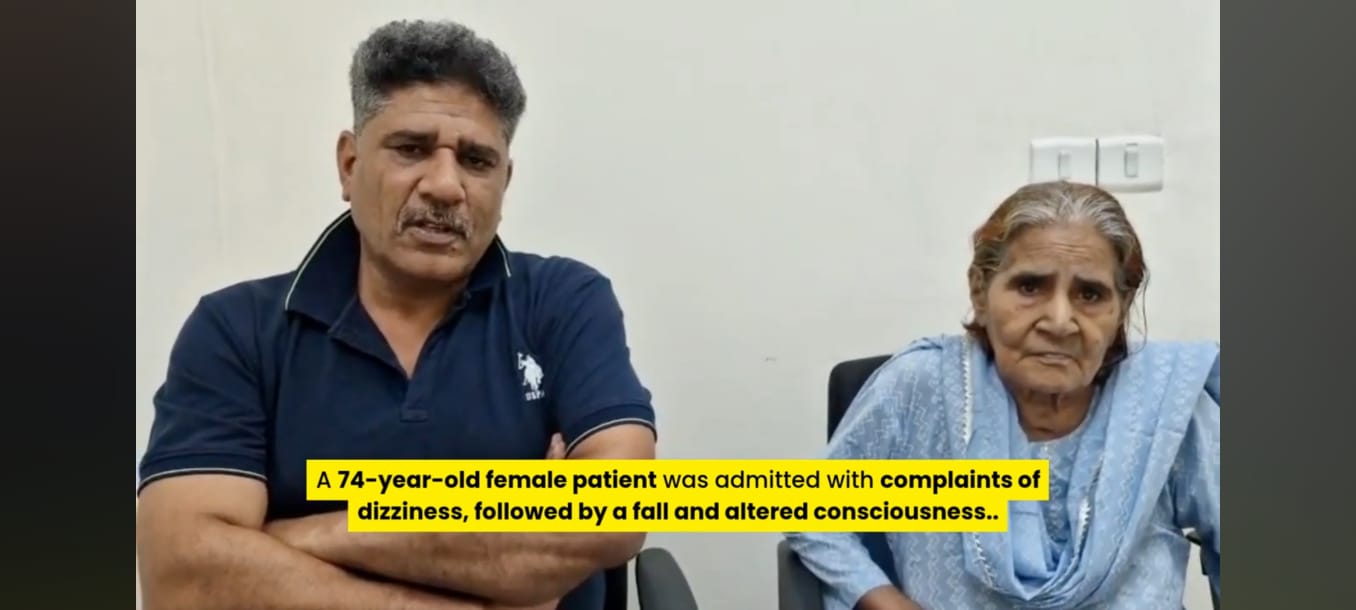
A 74-year-old female patient was brought to the emergency department after experiencing sudden dizziness followed by a fall and altered consciousness. Her condition rapidly worsened, and she developed repeated vomiting along with a low Glasgow Coma Scale (GCS) score — a sign of reduced brain function and a potentially life-threatening neurological emergency.
The patient required immediate critical care and advanced neurointerventional management.
Diagnosis: Ruptured Brain Aneurysm Causing Subarachnoid Hemorrhage
After urgent neurological evaluation and imaging, the patient was diagnosed with:
- Subarachnoid Hemorrhage (SAH) — bleeding around the brain
- Caused by a ruptured ACOM aneurysm (Anterior Communicating Artery aneurysm)
A ruptured brain aneurysm is a highly critical condition that can lead to severe brain damage, stroke, coma, or death if not treated immediately.
Advanced Neurointervention Procedures Performed
To stabilize the patient and prevent further complications, a series of advanced neurovascular procedures were performed under the supervision of a neurointerventional specialist.
Treatment & Procedures
- ✔️ Cerebral Angiography (DSA) for detailed diagnosis of the brain blood vessels
- ✔️ Balloon-Assisted Coiling to seal the ruptured aneurysm and stop further bleeding
- ✔️ Lumbar Drain Insertion to reduce pressure around the brain
- ✔️ Tracheostomy for airway and breathing support during critical care
- ✔️ Multiple Intra-Arterial Vasodilation Procedures to improve blood circulation in narrowed brain vessels
Intensive Care and Recovery Journey
The patient was admitted on 4th January 2026 in a critical neurological state and underwent continuous monitoring, neurocritical care, and rehabilitation support throughout her hospital stay.
After timely intervention and multidisciplinary management, her condition gradually stabilized.
She was successfully discharged on 28th January 2026 for further recovery and follow-up care.
Importance of Early Recognition in Brain Hemorrhage
Symptoms such as sudden dizziness, severe headache, vomiting, fainting, confusion, or loss of consciousness should never be ignored — especially in elderly patients.
A ruptured brain aneurysm requires immediate diagnosis and treatment. Early neurointervention can significantly improve survival and reduce long-term neurological disability.
Expert Neurointerventional Care Can Save Lives
This case highlights how rapid diagnosis, emergency neurointervention, and intensive critical care can help manage complex brain hemorrhage cases successfully.
Modern neurovascular treatments such as aneurysm coiling and minimally invasive brain vessel procedures are transforming outcomes for patients suffering from stroke and brain aneurysms.